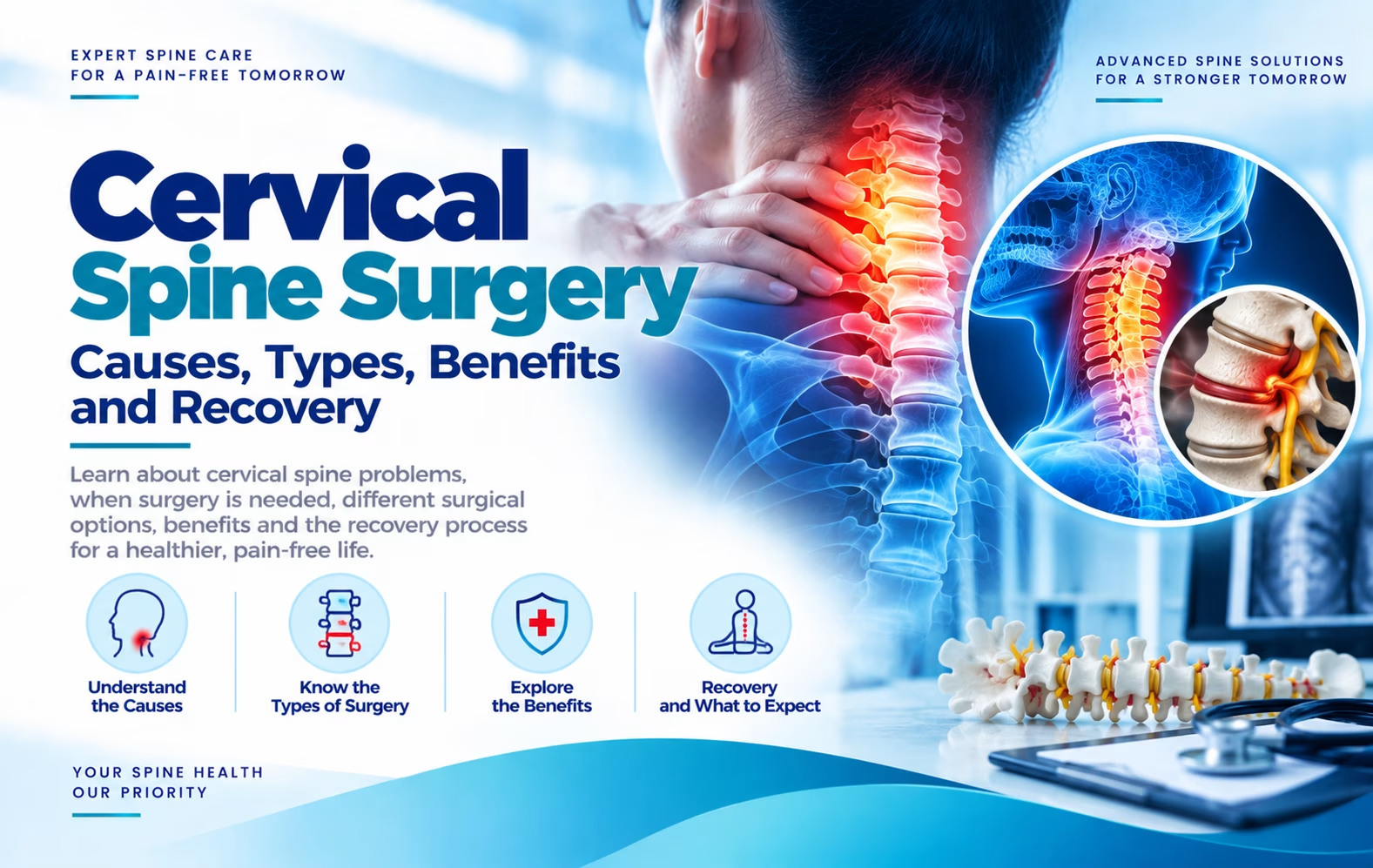
Understanding Cervical Spine Surgery - From Causes to Recovery
The cervical spine is the upper portion of the spinal column that supports the neck and protects the spinal cord. Problems affecting this region can cause persistent neck pain, stiffness, pain radiating into the shoulder or arm, numbness, weakness and, in more advanced cases, difficulty with walking or coordination.
Many cervical spine conditions can initially be managed with medicines, physiotherapy, activity modification and other non-surgical treatments. However, when symptoms are severe, neurological problems develop, or there is significant compression of the spinal cord or nerves, cervical spine surgery in Guwahati may be recommended.
At Hayat Hospital, patients with cervical spine conditions can undergo appropriate clinical and imaging evaluation to determine the cause of their symptoms and whether surgical or non-surgical treatment is most suitable.
Meet Dr. Mayukh Kamal Goswami

Dr. Mayukh Kamal Goswami
MBBS, MS (Surgery), M.Ch (Neuro Surgery)
Consultant, Dept of Neurosurgery, Hayat Superspeciality Hospital
Dr. Mayukh Kamal Goswami is a neurosurgeon at Hayat Hospital, Guwahati. With advanced training in neurosurgery, he evaluates conditions affecting the brain, spinal cord and nervous system, including spinal disorders that may require specialist surgical care.
Patients searching for the Best cervical spine surgery Doctors In Guwahati can consult Dr. Mayukh Kamal Goswami for assessment of persistent back pain, slipped discs, nerve compression, spinal cord conditions and other complex spinal problems.
What Is the Cervical Spine?
The cervical spine consists of the seven vertebrae located in the neck. These vertebrae work together with discs, joints, ligaments and muscles to provide stability and allow movements such as turning, bending and extending the neck.
The spinal cord passes through the spinal canal, while nerve roots branch out through openings between the vertebrae. When a disc, bone or other structure puts pressure on a nerve or the spinal cord, it can produce pain and neurological symptoms.
Common Conditions That May Require Cervical Spine Surgery
Cervical spine surgery is not required for every neck problem. Surgery may be considered when a structural abnormality is causing significant symptoms or neurological compression.
Cervical Disc Herniation
A cervical disc can become damaged or displaced and press against a nearby nerve root or, in some cases, the spinal cord. This may cause neck pain accompanied by pain, tingling or numbness extending into the shoulder, arm or hand.
Cervical Spondylosis
Cervical spondylosis refers to age-related degenerative changes in the cervical spine. Disc degeneration and bone-spur formation can sometimes narrow the space available for nerves or the spinal cord.
When significant nerve or spinal cord compression occurs, surgical treatment may be considered.
Cervical Spinal Stenosis
Cervical spinal stenosis occurs when the spinal canal becomes narrowed. If the narrowing compresses the spinal cord, it can lead to a condition called cervical myelopathy.
Cervical Myelopathy
Cervical myelopathy occurs when the spinal cord is compressed in the neck. Symptoms can include hand clumsiness, weakness, changes in walking or balance and difficulty performing fine movements.
Because prolonged spinal cord compression can potentially cause lasting neurological problems, patients with suspected myelopathy require timely assessment.
Cervical Radiculopathy
Cervical radiculopathy occurs when a nerve root in the neck becomes compressed or irritated. It can cause pain, numbness, tingling or weakness extending from the neck into the shoulder, arm or hand.
Cervical Spine Trauma
Fractures, dislocations or other injuries to the cervical spine may sometimes require surgery to stabilize the spine or protect the spinal cord.
Symptoms of Cervical Spine Problems
Cervical spine conditions can produce different symptoms depending on the affected structures and the degree of nerve or spinal cord involvement.
Common symptoms include:
- Persistent neck pain
- Neck stiffness
- Pain spreading to the shoulder or arm
- Tingling or numbness in the hand or fingers
- Arm or hand weakness
- Headaches associated with neck problems
- Reduced neck movement
- Difficulty with fine hand movements
- Balance or walking difficulties in cases involving spinal cord compression
Symptoms such as progressive weakness, difficulty walking or loss of coordination should receive prompt medical evaluation.
When Is Cervical Spine Surgery Recommended?
Surgery is generally considered only when it is appropriate for the underlying condition.
A spine specialist may recommend surgery when:
- Severe symptoms persist despite appropriate non-surgical treatment.
- A nerve is significantly compressed.
- There is spinal cord compression.
- Neurological weakness is progressing.
- Cervical myelopathy is present.
- A significant spinal deformity or instability exists.
- A fracture or injury requires stabilization.
- A structural problem is significantly affecting the patient’s quality of life.
The decision depends on the patient’s symptoms, neurological examination, imaging findings and overall health.
Diagnosis Before Cervical Spine Surgery
A detailed assessment is important before deciding whether surgery is necessary.
The doctor may evaluate the patient’s:
- Medical and surgical history
- Neck and arm symptoms
- Muscle strength
- Reflexes
- Sensation
- Walking and balance
- Range of neck movement
Imaging and other investigations may include:
X-Ray
X-rays can help evaluate the alignment and structure of the cervical spine and identify certain degenerative changes or instability.
MRI Scan
MRI is particularly useful for evaluating the spinal cord, nerves, discs and other soft tissues. It can help identify disc herniation, spinal cord compression and other causes of neurological symptoms.
CT Scan
CT scans provide detailed images of the bones and may be particularly useful when assessing fractures or bony abnormalities.
The exact investigations required depend on the patient’s symptoms and clinical findings.
Types of Cervical Spine Surgery
There are several surgical approaches to treating cervical spine disorders. The procedure selected depends on the location and cause of compression, the number of spinal levels involved and the patient’s individual condition.
Anterior Cervical Discectomy and Fusion (ACDF)
Anterior cervical discectomy and fusion, commonly known as ACDF, is a frequently performed procedure for selected cervical disc and nerve-compression conditions.
The surgeon approaches the cervical spine from the front of the neck, removes the problematic disc or other compressive material and creates space for the affected nerve or spinal cord. A bone graft or implant may then be used to stabilize the treated segment.
ACDF may be considered for selected patients with cervical disc herniation, cervical radiculopathy or spinal cord compression.
Cervical Disc Replacement
In appropriately selected patients, a damaged cervical disc may be replaced with an artificial disc.
The goal is to remove the problematic disc while preserving movement at the treated spinal level. Whether disc replacement is suitable depends on factors such as the patient’s age, spinal anatomy, diagnosis and extent of degeneration.
Cervical Laminectomy
A cervical laminectomy involves removing part of the vertebral bone called the lamina to create more space for the spinal cord.
It may be considered in certain cases of cervical spinal stenosis or spinal cord compression, particularly when multiple levels are involved.
Cervical Laminoplasty
Laminoplasty is another procedure designed to increase the space available for the spinal cord without completely removing the lamina.
It may be appropriate for selected patients with multilevel cervical spinal cord compression.
Cervical Fusion Surgery
In certain conditions involving instability or deformity, spinal fusion may be performed to stabilize the affected vertebrae. Instrumentation such as screws, rods or plates may be used depending on the surgical approach and the patient’s condition.
Minimally Invasive Approaches
Some cervical spine procedures can be performed using techniques designed to minimize tissue disruption. However, not every patient or condition is suitable for a minimally invasive procedure.
The safest and most appropriate approach depends on the specific spinal problem rather than simply choosing the least invasive technique.
Cervical Spine Surgery in Guwahati at Hayat Hospital
Patients searching for cervical spine surgery in Guwahati can consult the appropriate specialists at Hayat Hospital for evaluation of neck, spinal and neurological symptoms. The treatment process begins with a detailed clinical assessment and appropriate imaging. Based on the diagnosis, the specialist determines whether conservative treatment, physiotherapy, medication or surgery is appropriate.
When surgery is recommended, the procedure is selected according to the patient’s specific spinal condition, the level of compression and overall health. The goal is not simply to perform surgery, but to provide an appropriate treatment plan aimed at relieving symptoms, protecting neurological function and helping the patient return to daily activities.
When Should You See a Spine Specialist?
You should consider medical evaluation if you have persistent neck pain accompanied by:
- Pain radiating into the arm
- Numbness or tingling in the hands
- Weakness in the arm or hand
- Increasing difficulty with fine hand movements
- Problems with balance or walking
- Symptoms that are progressively worsening
- Neck symptoms following significant trauma
Sudden or rapidly progressing weakness, difficulty walking, significant loss of coordination or other severe neurological symptoms require prompt medical attention.
FAQ (Frequently Asked Questions)
Not usually. Many causes of neck pain can be treated without surgery. Surgery is generally considered when there is significant nerve or spinal cord compression, instability, trauma or persistent symptoms despite appropriate non-surgical treatment.
ACDF is a commonly performed procedure for selected cervical disc and nerve-compression conditions. However, the appropriate procedure depends on the patient’s diagnosis and spinal anatomy.
Recovery varies according to the type of surgery, the number of spinal levels treated and the patient’s general health. Your surgeon will provide individualized recovery and rehabilitation guidance.
Yes, in selected cases. Cervical spondylosis may cause significant nerve or spinal cord compression. If symptoms are severe or neurological problems develop, surgery may be considered.
Persistent neck pain, arm pain, numbness, weakness, balance problems or difficulty with hand coordination should be evaluated by a qualified specialist, particularly if symptoms are worsening.